

What Artificial Intelligence Can and Can’t Do in CDD
Recently, a consulting and diligence firm tested three leading AI platforms (Gemini Pro, ChatGPT, and AlphaSense) head-to-head against human expertise on a market sizing exercise for a payment processing vertical. The result: AI estimates were off by more than $30 billion on a single market. The actual serviceable market was roughly $2 billion. AI overestimated it by a factor of 15x!
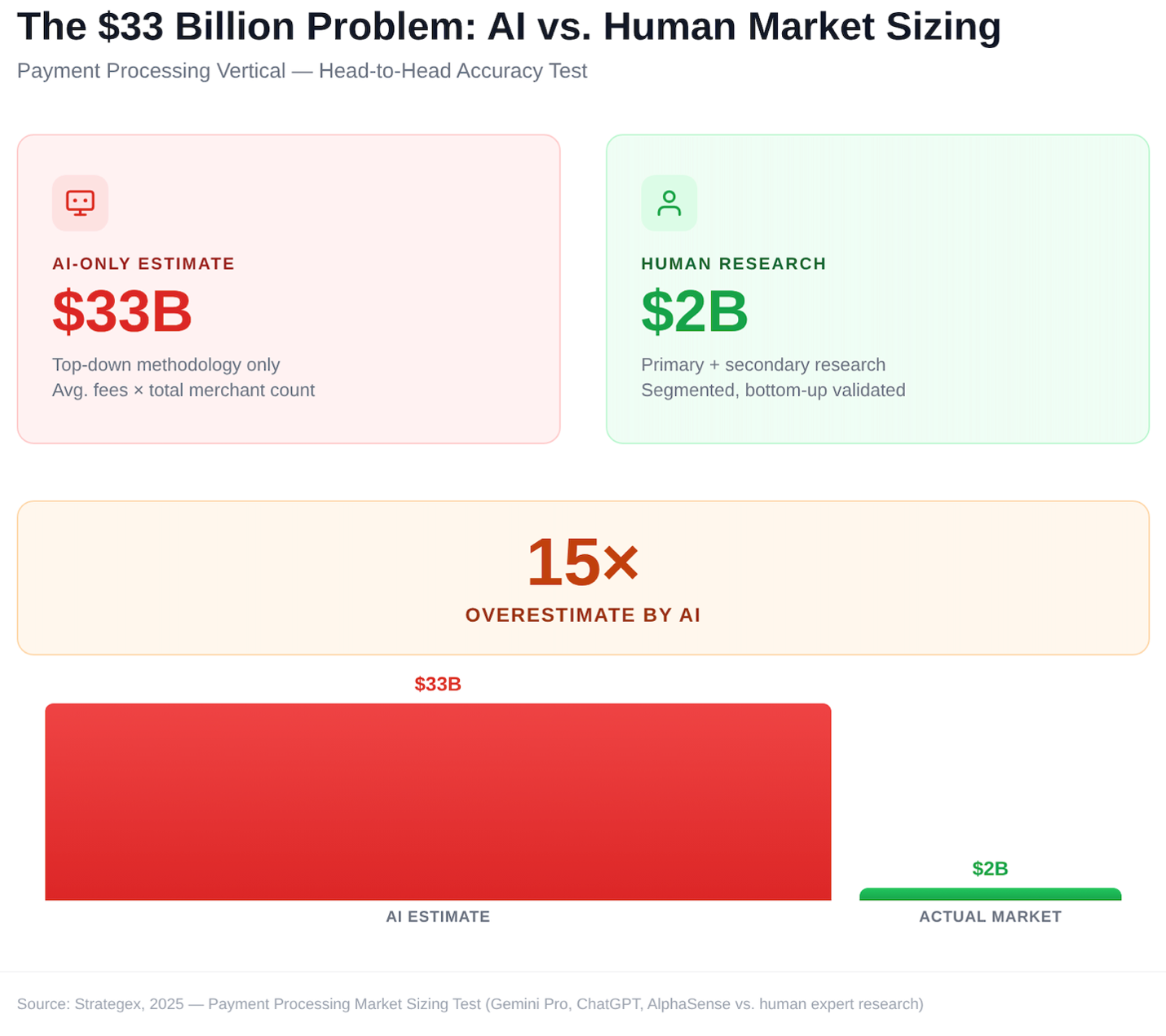
Figure 1: The $33 Billion Problem: AI vs. Human Market Sizing
How does a 15x error happen? The AI models calculated average software fees and multiplied by total merchant count, a straightforward top-down approach that looks perfectly logical in the output. Clean math. Credible sources cited. Professional prose explaining the methodology.
But the approach ignored the reality that a major online retailer’s transaction economics are fundamentally different from a local craft store’s. It couldn’t distinguish between market segments that behave completely differently. It applied a single average to a distribution that has no meaningful average.
The Hype vs. The Reality
Every PE firm in America has someone on the team experimenting with AI. ChatGPT for market overviews. Perplexity for competitive landscapes. Claude for synthesizing data room documents. Keye’s Odin for automated financial diligence. The pitch from every direction is the same: AI will make diligence faster, cheaper, and better.
Two of those three are true. The third is where it gets dangerous.
AI is transforming parts of the commercial due diligence process. It compresses timelines on secondary research that used to take weeks into hours. It enables analysts to process more data, surface more patterns, and build more robust preliminary hypotheses before a single interview is conducted. McKinsey reports that firms using gen AI in M&A activities see roughly 20% cost reductions and 30-50% faster deal cycles. Deloitte’s 2025 study found that 86% of M&A organizations have already integrated AI into their workflows. According to Pictet’s 2024 survey, nearly two-thirds of PE general partners are running gen AI pilots, and over 40% use it in active business processes. Almost two-thirds of firms already apply AI to due diligence and data analysis specifically.
These are real gains. They matter. And any CDD provider that isn’t leveraging AI to enhance their research process is falling behind.
But here’s what the AI evangelists don’t tell you: when you put it to a head-to-head test, market modeling errors are significant. Take, for example, the aforementioned AI+Human vs. AI-only study that found a $33 billion market sizing error!
AI is exceptionally good at producing confident, well-articulated answers that are completely wrong. And in commercial due diligence, where a single flawed assumption can misvalue a deal by millions, “confidently wrong” is the most expensive kind of wrong there is. The right auditing, sourcing constraints, and logic can make a big difference in the output generated.
This latest installment in our series on CDD is about drawing the line clearly: where AI accelerates CDD, where it creates risk, and where the frontier is heading. Because the firms that get this right will have a genuine edge. And the firms that outsource diligence to a chatbot will learn the hard way that LLMs (Large Language Models) don’t have deal judgment, real-time human input from primary research, or accountability to a consultant who is proud to stand behind their conclusions, recommendations, predictions, and advice.
Where AI Genuinely Accelerates CDD
Let’s give credit where it’s due. Dismissing AI entirely would be as foolish as blindly trusting it. The capabilities are real, the gains are measurable, and the firms leveraging AI intelligently are producing better work faster.
1. Secondary Research at Scale
This is AI’s sweet spot in CDD. The traditional secondary research phase (scanning industry reports, pulling market data, reviewing published financial information, aggregating news and press releases) used to consume the first 1-2 weeks of an engagement. Analysts would manually review dozens of sources, extract relevant data points, and synthesize them into a working hypothesis.
AI compresses this dramatically. A well-prompted LLM can produce a preliminary market overview, competitive landscape, and trend analysis in hours. It can scan hundreds of sources simultaneously, identify patterns across documents, and generate a structured starting point that would have taken a human team days to assemble. This similarly applies to analyzing reams of qualitative (transcripts) or quantitative (e.g., survey, first-party, third-party) data. With proper domain knowledge, context, and methods applied, AI-driven solutions shift from days of analyst time capturing “most of the language” or “most of the patterns” to what is truly a comprehensive and complete review of every single data point.
In practice, this means we can now generate a 20-page preliminary market landscape document covering market size estimates from published sources, competitor profiles, recent transaction activity, regulatory developments, and trend analysis in a single afternoon rather than over five working days. That document isn’t the deliverable. It’s the foundation that the research team reviews, challenges, and then designs primary research around.
The key phrase is “starting point.” The secondary research that AI produces is a hypothesis to be tested, not a conclusion to be delivered. But as a hypothesis generator, it’s powerful. It means our team arrives at the kickoff meeting with a richer initial understanding of the market, sharper questions, and a more targeted research design.
Compressing the timeline for this thesis-building action while leveling up the search from deep to comprehensive is a clear win that allows investors and clients to benefit in hard dollars, increased depth of insights, and speed to clarity.
2. Data Room Processing and Document Intelligence
The modern deal data room contains thousands of documents: contracts, financial statements, customer lists, operational reports, legal filings, tax returns, insurance policies, employee agreements. Historically, reviewing this material required armies of associates spending days extracting key terms, flagging risks, and identifying inconsistencies.
AI-powered document review tools can process these volumes in a fraction of the time. Natural language processing extracts key contract terms, identifies unusual clauses, flags concentration risks, and surfaces anomalies that human reviewers might miss after hours of eye-glazing document review. This is particularly valuable for legal and financial due diligence, where the task is pattern-matching across large document sets.
For commercial due diligence specifically, AI can quickly extract and organize customer data, revenue breakdowns, pricing structures, and operational metrics from the data room, giving the CDD team a cleaner, faster foundation for their primary research design. When we receive a CIM and supporting data room access, AI tools can extract the key commercial assertions, market share claims, growth rates, customer counts, pricing assumptions, competitive positioning statements, and organize them into a testable hypothesis framework within hours.
The latest generation of AI tools goes further. Companies like Keye are building what they call “deterministic co-pilots,” AI agents that can ingest entire data rooms, extract structured terms and KPIs, reconcile inconsistencies across documents, and produce audit-ready analysis. Keye’s CEO describes the vision as an “Autonomous Deal Team” where coordinated AI agents simultaneously analyze financial, commercial, and legal dimensions of a business.
We’re not there yet. But the direction is clear, and the document processing capabilities available today are already materially improving the speed and thoroughness of the data room review phase.
3. Competitive Intelligence Aggregation
AI excels at gathering and organizing publicly available competitive information: company descriptions, product offerings, pricing (where published), employee counts, geographic footprints, funding history, recent news, leadership changes, job postings, patent filings, and social media presence. It can build a preliminary competitive landscape faster than a team of analysts manually researching each competitor.
Where AI particularly shines is in identifying competitive signals that humans might miss due to volume constraints. Monitoring 40 competitors’ job postings for hiring patterns, tracking pricing changes across dozens of product pages, scanning court filings for litigation patterns, aggregating customer reviews across platforms: these are tasks that benefit enormously from AI’s ability to process volume without fatigue.
This competitive scaffold is valuable. It tells you who the players are, roughly how they’re positioned, and what’s changed recently. What it can’t tell you, and this is the critical gap, is how those competitors actually win deals, what their customers think of them, where their real vulnerabilities are, or what their strategic intentions are. That requires primary competitive intelligence: actual conversations with industry participants, customers, and sometimes the competitors themselves.
Earlier in this series on CDD for Private Equity, we discussed the power of AI-driven brand scans that scrape reviews and rapidly analyze results to inform on positioning, customer feedback, and brand sentiment across a sector. This is a perfect example of AI allowing researchers and investors to significantly increase the total relevant data in an analysis and supply insights with inconsequential cost.
4. Pattern Recognition and Anomaly Detection
Across large datasets (financial data, customer transaction records, survey responses, web traffic patterns) AI can identify patterns, outliers, and correlations faster than manual analysis. This capability is particularly useful in the quantitative portions of CDD.
Examples of what AI-powered pattern recognition enables in CDD:
- Spotting revenue concentration patterns across thousands of customer records and flagging that 4 accounts represent 63% of revenue
- Identifying seasonality anomalies that suggest channel-specific demand drivers
- Detecting customer churn acceleration that isn’t visible in annual summary data but becomes clear in monthly cohort analysis
- Cross-referencing pricing data across customer segments to identify inconsistent discounting patterns that suggest weaker negotiating power than management claims
- Scanning survey open-ends for sentiment patterns across hundreds of responses, identifying thematic clusters that inform the overall competitive narrative
These are tasks that human analysts can perform, but AI performs them faster and, importantly, more comprehensively. A human analyst reviewing 500 survey open-ends will inevitably skim some responses by hour three. AI doesn’t get tired. At Martec we leverage one such specialized tool called DTECT to protect the sanctity of our data in addition to AI and human QC of incoming data.
Just keep in mind that bad actors such as fraudsters and professional survey takers are deploying the same technology with the opposite intent.
5. Interview Transcription, Analysis, and Synthesis
This is one of the most practically valuable AI applications in our CDD workflow today. AI-powered transcription has transformed how we capture and utilize interview intelligence.
Every primary research interview we conduct is now transcribed in real time with AI. But transcription is just the starting point. AI analysis tools can:
- Identify recurring themes across 50 interviews, surfacing patterns that might not be obvious when reviewing individual transcripts sequentially
- Flag contradictions between what different interviewees say about the same topic (e.g., one distributor says pricing power is strong, another says it’s eroding; AI catches this discrepancy and surfaces it for analyst review)
- Generate preliminary sentiment analysis across interviewee types (customers positive on product, negative on service; distributors positive on margin, negative on lead times)
- Create searchable, cross-referenced interview databases that allow the team to quickly pull every mention of a specific competitor, product feature, or pricing topic across the full interview set
- Produce first-draft thematic summaries organized by research question, which senior analysts then refine with interpretation and judgment
The result: insights that used to take days to synthesize across a large interview set now surface in hours. The senior analyst spends their time on interpretation and judgment rather than mechanical transcription review. That’s a genuine quality improvement, not just a speed improvement.
6. Report Drafting and Production
AI can produce well-structured first drafts of analytical narratives, organize findings into logical frameworks, synthesize multiple data inputs into coherent summaries, and generate supporting visualizations and data tables. This reduces the mechanical writing burden and allows senior analysts to focus on insight, interpretation, and recommendation rather than paragraph construction.
In our workflow, AI assists with:
- Generating first-draft sections from structured interview notes and data analysis
- Creating data visualizations and charts from market models
- Formatting competitive benchmarking tables from raw data
- Producing executive summary frameworks that senior analysts then refine with deal-specific judgment and recommendation language
- Quality-checking for internal consistency across report sections
This doesn’t mean the report is “written by AI.” It means the mechanical production work is accelerated so the senior team can invest more time in the thinking: the analysis, the interpretation, the “so what does this mean for your thesis?” work that ultimately determines whether the CDD engagement is valuable.
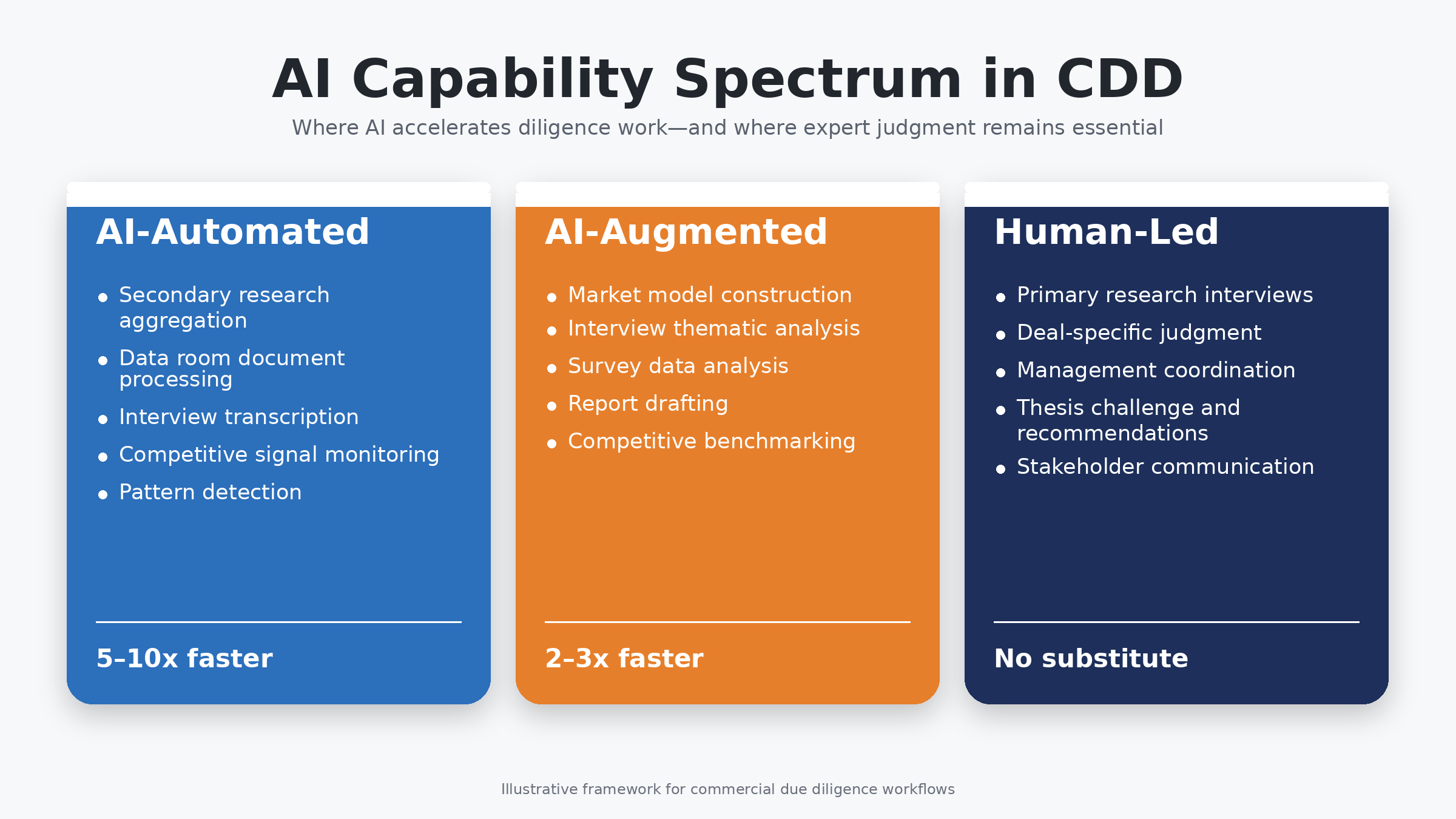
Figure 2: AI Capability Spectrum in Commercial Due Diligence
Where AI Falls Down, and Why It Matters for CDD
Now for the part that matters more: the places where AI creates risk in CDD. These aren’t edge cases. They’re the core of what makes commercial due diligence valuable, and they’re the reasons that AI-generated market research is not a substitute for real CDD, regardless of how impressive the output looks.
The $31 Billion Market Sizing Problem
The significant error or discrepancy cited at the open is not a bug in AI. It’s a feature of how LLMs work. They’re pattern-matching engines that produce the most statistically likely output given their training data. They don’t understand market dynamics. They don’t know which segments matter for a specific investment thesis. They can’t interrogate their own assumptions. And they present every answer, right or wrong, with the same confident, polished prose.
This is why we don’t use AI for final market sizing in CDD. We use it to generate preliminary estimates and identify potential data sources, and then our analysts build the actual TAM/SAM/SOM model using a hybrid methodology: top-down framing from published data, bottom-up validation from primary interviews with market participants, and triangulation across multiple independent sources. Every assumption is transparent, auditable, and stress-testable.
For market sizing in CDD, where the difference between a $2B SAM and a $33B TAM determines whether you write a check or walk away, “close enough” doesn’t exist. A 15x overestimate isn’t a rounding error. It’s a thesis-altering failure that, if relied upon, leads to a fundamentally misvalued investment.
AI Can’t Make a Phone Call
This is the most fundamental limitation, and it’s the one that separates real CDD from AI-generated market research.
The highest-value insights in commercial due diligence come from primary research: direct conversations with customers, competitors, industry experts, channel partners, suppliers, and other market participants. These aren’t optional add-ons. They’re the core of what makes CDD worth the investment.
When a distributor tells you, off the record in a 45-minute phone call, that their largest customer is quietly evaluating two competitors, that insight is worth more than every market report ever published on that industry. When a former executive at the target’s closest competitor explains exactly why they lost three major accounts last year, that’s intelligence you cannot get from any database, any AI model, or any amount of secondary research.
Consider what a skilled CDD interviewer does in a single customer call:
- Opens with rapport-building that establishes trust and signals genuine expertise in the industry
- Navigates from general topics to sensitive ones (pricing, satisfaction, competitive evaluation) with a conversational flow that doesn’t trigger defensiveness
- Recognizes when the interviewee’s tone shifts, the pause before answering a question about contract renewal, the careful word choice when discussing a competitor, and pursues those signals
- Asks the follow-up question that nobody anticipated, triggered by something the interviewee just said that connects to a pattern from three other interviews conducted that week
- Reads between the lines: the customer who says “we’re satisfied” but whose purchasing data shows declining volume is telling you two stories simultaneously
- Manages the dynamic when a respondent wants to share something sensitive but needs reassurance about confidentiality
- Captures not just what was said but the conviction level behind it, the difference between “I think they’ll renew” and “they absolutely will renew, I’d bet my job on it”
These are profoundly human capabilities. They require emotional intelligence, subject matter expertise, conversational agility, and real-time judgment that no AI system can replicate.
Yes, AI voice agents are advancing rapidly. Andreessen Horowitz published a comprehensive update on voice AI in 2025, and the technology is impressive for structured conversations: customer support, appointment scheduling, basic qualification calls. MarketsandMarkets reports that AI-generated cold calls achieve 36% higher meeting conversion rates than generic approaches.
But CDD interviews are not cold calls. They’re not structured conversations with predictable flows. They’re investigative dialogues with experienced business executives who will shut down the moment they sense they’re talking to a script, human or artificial. A VP of Supply Chain at a Fortune 500 company is not going to share their candid assessment of a supplier’s pricing power with an AI voice agent. That conversation requires trust, expertise, and the ability to have a genuine dialogue that goes wherever the intelligence leads.
The day AI can conduct a 45-minute investigative interview with a skeptical industry expert and extract insights the expert didn’t intend to share is the day AI replaces CDD researchers. We’re not there. We’re not close. And anyone who tells you otherwise hasn’t conducted tens of thousands of these interviews.
AI Hallucinates, and It Doesn’t Know It’s Hallucinating
McKinsey’s own research on gen AI in diligence warns that one of the biggest risks is “mistaking fluency for accuracy.” Gen AI produces confident, well-articulated outputs, but that polish can mask serious flaws.
The examples are sobering:
- Ungoverned AI tools have generated peer sets for competitive analysis that ignored fundamental business model differences, comparing a SaaS company to a hardware manufacturer because both sell to the same end market
- AI-generated cost estimates have been surfaced that were disconnected from operational realities, built on training data from different geographies or time periods
- In McKinsey’s direct language, AI tools have “hallucinated metrics from misinterpreted text,” inventing data points from footnotes, headers, or captions that were never intended as quantitative assertions
- In one documented case during a manufacturing acquisition, an AI tool analyzing financial statements confidently reported that a 2022 real estate transaction was tax-compliant, citing a tax declaration document that did not exist. The result: a $1.5 million tax liability discovered post-close
- AI tools have generated market share estimates by averaging incompatible data sources, mixing unit share, revenue share, and capacity share into a single meaningless number
This matters in CDD because the outputs often look impeccable. The formatting is clean. The logic appears sound. The citations look real. It takes a subject matter expert to recognize that the market segmentation doesn’t actually make sense, that the competitive positioning is based on outdated information, or that the growth rate was hallucinated from a misread footnote.
Nicolas Mialaret, a CDD practitioner writing on Medium, puts it plainly: “Until commercial LLMs improve the traceability of their logic, forget about using AI for quantitative analysis and forecasting.” When you’re building a TAM/SAM/SOM model that will determine the valuation of a $100 million acquisition, “forget about it” is the right starting point.
The governance issue is critical. Any CDD provider using AI without rigorous review protocols is introducing systematic risk into their work product. Every AI-generated output must be reviewed by a subject matter expert who can recognize when the confident, well-formatted answer is confidently, well-formatted wrong.
The Synthetic Respondent Problem: Why AI Can’t Replace Real Customer Research
If the market sizing problem demonstrates AI’s quantitative limitations, the emerging evidence on “synthetic respondents” reveals an equally dangerous qualitative one. A growing number of research vendors and AI platforms are now marketing the ability to generate synthetic survey data, AI-simulated responses that claim to replicate how real customers, buyers, or market participants would answer survey questions. The pitch is seductive: why spend weeks recruiting and interviewing 200 real customers when an LLM can simulate their responses in minutes?
Because the simulated responses are wrong. Frequently, and in ways that matter enormously for CDD.
Verasight, a survey methodology firm, has conducted three rigorous head-to-head studies testing LLM-generated synthetic responses against real human survey data. The results should give every PE investor pause:
In their December 2025 omnibus study, where they surveyed 2,000 real U.S. adults and then asked leading LLMs to generate synthetic responses to the same questions, the mean absolute error across single-answer questions was 14.5 percentage points. That’s not a margin of error. That’s a chasm. On a question where 60% of real respondents selected Option A, the AI might say 45% or 75%. For a CDD engagement where you’re trying to understand whether 60% or 40% of customers would switch providers if pricing increased 10%, a 14.5-point error makes the finding meaningless.
But it gets worse. The errors are not random; they’re systematically biased in ways that distort the intelligence picture:
- Synthetic respondents flatten the extremes. Real human opinions cluster in surprising, uneven ways. People have strong views, contradictory preferences, and irrational loyalties. LLMs smooth all of this into bland, centrist distributions that miss the passionate detractors and fierce advocates who actually drive market behavior. In CDD, it’s the extremes that matter most: the 15% of customers who are actively looking to switch suppliers, or the 20% who would pay a significant premium for the target’s product. Synthetic data buries these signals.
- Synthetic respondents miss nuance shaped by lived experience. Verasight found that political questions (which LLMs have been extensively trained on) showed lower error, but questions rooted in personal behavior, preferences, and lived experience showed dramatically higher divergence. This is exactly the category that CDD customer research falls into. How a procurement director at a Midwest industrial distributor thinks about switching costs for an MRO supplier is shaped by 20 years of lived experience. No LLM has that experience. It has text about that experience, which is a fundamentally different thing.
- Multi-response questions fail catastrophically. When respondents could select multiple answers (e.g., “Which of the following factors influence your purchasing decision? Select all that apply”), LLMs performed so poorly that Verasight excluded multi-response questions entirely from their main accuracy analysis. The AI consistently failed to select response options chosen by large shares of real respondents. For CDD surveys, where multi-select questions are a staple of competitive evaluation, purchase driver analysis, and customer satisfaction research, this failure mode is devastating.
- Market research questions perform worst of all. Verasight’s separate study testing LLM-generated responses on consumer market research questions (specifically about coffee purchasing behavior) found a mean absolute error of 19.8 percentage points, nearly 20 points off on average. Unlike the political questions where LLMs could approximate top-level results, market research questions about real consumer behavior were a wholesale failure.
The implications for CDD are direct and serious. If you’re evaluating a commercial due diligence provider who tells you they’ve “surveyed” 500 customers using AI-generated synthetic respondents, what you actually have is a statistical hallucination: a dataset that looks like customer research, formats like customer research, and reads like customer research, but reflects the LLM’s training data rather than the actual opinions of real market participants.
NielsenIQ’s research corroborates this concern: synthetic respondent methodologies work by replicating the distribution and correlations from existing data, but this process doesn’t make the data more reflective of the actual population. It simply recreates, and reinforces, whatever biases existed in the training data. You’re not getting a larger sample. You’re getting the same sample, repeated with artificial confidence.
NORC at the University of Chicago, one of the most respected independent research organizations in the country, published a comprehensive analysis of AI-augmented survey research in 2025 warning of the same fundamental limitation: synthetic responses lack the diversity, depth, and authentic variability of real human perspectives. They capture general trends but miss the granularity that drives actionable intelligence.
This matters for CDD because the entire value of customer research lies in the specifics. Not “customers are generally satisfied” but “customers at accounts under $500K are satisfied, customers at accounts over $2M are actively evaluating alternatives, and the three largest accounts have specific service complaints that management hasn’t addressed.” Synthetic data can produce the first finding. Only real research produces the second and third, which are the ones that change how you think about the deal.
The bottom line: synthetic respondent data is not customer research. It’s AI-generated content that mimics the format of customer research. For CDD, where the accuracy of customer intelligence directly informs whether you write a $100 million check, the distinction is existential.
AI Can’t Assess Deal-Specific Context
Every CDD engagement exists within a specific deal context: the investor’s thesis, the target’s competitive position, the management team’s capabilities, the integration strategy, the hold period objectives, the fund’s portfolio concentration, the LP expectations, and the competitive dynamics of the auction process itself. AI doesn’t understand any of this. It can’t weight its findings against your specific investment criteria. It can’t distinguish between a risk that matters for your strategy and one that’s irrelevant.
When we conduct CDD, we’re not producing a generic market report. We’re answering a specific investor’s specific questions about a specific target in a specific deal context.
- Should you pay 12x EBITDA for this business given the competitive dynamics we’ve uncovered?
- Is the management team’s growth plan realistic given what customers actually say about their appetite for the target’s new product line?
- Can this platform support the bolt-on strategy your value creation team has in mind, or will the integration complexity overwhelm the target’s current operations?
- Is the 8% organic growth assumption in your model consistent with what we’re hearing from the market, or is 4-5% more realistic given the competitive entry we’ve identified?
- The seller says pricing power is strong. Our interviews say it’s moderate at best. Which assumption should drive your underwriting?
These are judgment questions. They require synthesizing primary research, market data, competitive intelligence, and deal context into a recommendation that accounts for nuance, uncertainty, and strategic trade-offs. AI can provide inputs to that judgment. It cannot replace it.
AI Can’t Navigate the Human Element of Deals
CDD doesn’t happen in a vacuum. It happens under deal pressure, with tight timelines, sensitive management dynamics, and competing stakeholder interests.
The CDD provider is simultaneously coordinating with:
- The deal team (who needs findings structured to support the IC memo)
- The target’s management (potentially) (who may be nervous about customer outreach)
- Legal counsel (who may need specific customer interview questions addressed)
- The lender’s advisory team (who may have their own market questions)
- The operating/value creation team (who needs findings that translate into post-close action)
Managing these relationships, navigating political dynamics, adjusting research priorities in real time based on emerging findings from other workstreams, and making judgment calls about how to present findings that contradict the thesis: these require human expertise and relationship management that no AI model can replicate.
When the deal team calls at 9 PM because a competing bidder just raised their offer and the IC meeting was moved up three days, the CDD lead must make immediate judgment calls about which findings are solid enough to present now, and which need another round of validation. That’s not an AI decision. That’s experience.
The Value of Thinking: Why Speed of Information Is Not Speed of Judgment
There is a deeper tension beneath all of these technical capabilities and limitations, and it goes to the heart of what commercial due diligence is actually worth. The AI era has created a subtle but dangerous shift in how people think about knowledge work: if a machine can produce a 30-page market analysis in 20 minutes, why would you pay a team of consultants to spend three weeks on the same question?
The answer reveals the most important distinction in the entire AI-and-CDD conversation: there is a fundamental difference between having information quickly and having someone help you make a decision well.
Information vs. Judgment: The Real Value of CDD
Consulting and strategic research firms have always operated in two overlapping but distinct value spaces. The first is information gathering: assembling data, organizing facts, mapping competitive landscapes, quantifying market sizes. The second is judgment formation: interpreting what the data means for a specific decision, weighing conflicting signals, recognizing what the data isn’t telling you, and standing behind a recommendation when the stakes are high.
For decades, these two activities were bundled together because information was expensive to get. You needed people to make phone calls, fly to industry conferences, cultivate relationships with domain experts, pore through trade publications and SEC filings. The cost of gathering information created a natural floor under the value of the entire engagement, and the judgment that came along with it was almost a bonus on top.
AI has effectively collapsed the first value space. Secondary research that cost $50,000 and two weeks of analyst time can now be approximated in an afternoon for a fraction of the cost. The information itself, the raw data, the competitive profiles, the market trend summaries, is becoming commoditized at an extraordinary pace.
What has not changed, and what AI has actually made more valuable by contrast, is the second space: judgment. The ability to look at the same data everyone else has access to and see something that changes the decision. The ability to know which pieces of information matter for this deal and which are noise. The ability to sit across from an Investment Committee and say “the market data says one thing, but our 40 customer interviews say something else, and here’s why you should listen to the customers.”
Jack Skeels, a former RAND researcher and management consultant who has studied knowledge work organizations for over two decades, frames this as the central crisis of AI-era professional services. When clients can get answers quickly from AI, the instinct is to assume the answers are the product. But in CDD, as in all high-stakes consulting, the answers were never the product. The product is the thinking that determines which answers to trust.
The Decision Support Gap
To understand why this matters for CDD, consider two scenarios.
Scenario A: The AI Report. A PE deal team uses an AI platform to generate a 40-page commercial assessment of a $150 million specialty chemical distributor. The report covers market size, competitive landscape, customer concentration, growth trends, and margin analysis. It’s well-structured, footnoted, and delivered in 48 hours. Cost: negligible.
Scenario B: The CDD Engagement. The same deal team commissions a three-week CDD engagement. The CDD team uses AI to accelerate secondary research and data processing (completing in days what used to take weeks), but the core of the engagement is 35 primary interviews with customers, competitors, suppliers, and industry experts. The senior consultant synthesizes all of this, AI-assisted analysis and human intelligence alike, into a set of findings and recommendations calibrated to this deal team’s specific thesis, hold period, and value creation plan.
In Scenario A, the deal team has information. In Scenario B, they have decision support. The difference between those two things is the difference between knowing the market is “$2-4 billion depending on how you define the serviceable segments” and knowing “the $3.2 billion number management cited in the CIM is defensible for the legacy product line, but the $800 million new-market opportunity they’re projecting assumes a win rate against entrenched competitors that none of the 12 distributors we interviewed consider realistic. Your underwriting model should use $200-300 million for that segment, which changes the growth story from 12% to 6-7% organic.”
One of those outputs adjusts a deal model. The other one could save you from a bad investment or give you the conviction to move faster than competing bidders.
Why AI Makes Human Judgment More Valuable, Not Less
Here is the counterintuitive truth that many PE firms are still working through: the more accessible information becomes, the more valuable the judgment layer on top of it becomes.
When information was scarce, you could differentiate simply by having better data. A consulting firm that had access to proprietary databases, industry relationships, and experienced analysts who could find the right numbers faster than competitors had a meaningful edge. That edge is evaporating. Every deal team now has access to the same AI tools, the same data platforms, the same ability to generate a preliminary market landscape in hours.
In that world, the differentiation shifts entirely to the judgment layer. Who can take the same publicly available information and draw a sharper conclusion? Who can pair that secondary intelligence with primary research insights that nobody else has? Who can synthesize conflicting data into a recommendation that accounts for the nuances of this specific deal?
A February 2026 Harvard Business Review study examined this dynamic across knowledge work organizations and identified an uncomfortable paradox. Experienced professionals with deep domain expertise see enormous productivity gains from AI: they produce more, faster, and with higher quality, because they know enough to direct the AI effectively and catch its mistakes. But less experienced professionals, the junior analysts and associates who would normally be building their own expertise through years of hands-on analytical work, are at risk of a judgment development gap. If AI handles the analytical grunt work that used to build pattern recognition and domain intuition over time, how do the next generation of senior consultants, the ones who will eventually sit across from Investment Committees and challenge deal theses, develop the judgment to do that?
This is not a theoretical concern. It’s playing out right now in consulting firms, investment banks, and research organizations. And it has direct implications for how PE investors evaluate CDD providers. You want a firm where the senior team has genuine expertise (built over hundreds of engagements, not delegated to AI) and where that expertise is being actively developed in the next generation of analysts, not just augmented past.
What This Means for How You Evaluate CDD
The practical implication is this: in a world where AI makes information cheap, the firms that will deliver the best CDD are the ones that invest most heavily in the judgment layer. That means experienced senior consultants who lead engagements personally, not just review the output of an AI-assisted analyst pool. It means a research methodology built around primary intelligence gathering, not around reformatting what AI already found in published sources. It means the ability to sit across from a deal team and have a substantive conversation about what the findings mean, where the thesis is strong, where it has gaps, and what to do about it.
The question for PE investors is no longer “does my CDD provider use AI?” (they all should). The question is “does my CDD provider use AI to replace thinking, or to make thinking better?”
The answer to that question should drive your provider selection more than price, speed, or the impressiveness of the AI platform they’re marketing.
The Frontier: AI Agents and What’s Coming
We’d be doing a disservice if we didn’t acknowledge that the AI landscape is evolving at extraordinary speed, and the limitations we’ve described above will narrow over time. Any honest assessment of AI’s role in CDD has to account for where the technology is heading, not just where it is today.
Agentic AI: From Tools to Teammates
The most significant shift in AI capability isn’t better chatbots. It’s the emergence of AI agents: autonomous systems that can plan multi-step research workflows, use tools, make decisions about next steps, and execute complex sequences of tasks without continuous human direction.
Accenture’s 2026 analysis describes this as a fundamental shift for PE: moving from “AI-enabled analysis” to “AI-orchestrated workflows” where intelligent agents scan markets, model scenarios, raise diligence red flags, and support integration planning in real time. These aren’t hypothetical. Firms are building them now.
What agentic AI can do today (or will very soon):
- Autonomous market scanning: AI agents that continuously monitor news, filings, job postings, and competitive signals across an entire sector, building and maintaining a living competitive landscape without human prompting
- Multi-source data reconciliation: Agents that pull financial data from the data room, market data from published sources, and competitive data from public filings, then automatically flag inconsistencies and areas requiring human investigation
- Dynamic research planning: Systems that take an initial investment thesis, break it into testable hypotheses, identify the data sources and research methods needed to test each hypothesis, and generate a preliminary research plan
- Automated financial modeling: AI agents that build preliminary financial models from CIM data, sensitivity-test key assumptions, and flag where commercial due diligence findings should inform specific model inputs
- Post-close monitoring: Agents that track KPIs, competitive developments, and market shifts against the CDD baseline, alerting the portfolio company and operating team when something material changes
These capabilities are real and advancing rapidly. The PE firms building these workflows are gaining genuine advantages in deal speed and analytical depth.
AI Voice Agents: The “Will AI Make the Call?” Question
This is the question everyone asks, and it deserves a direct answer.
AI voice technology has made remarkable progress. Andreessen Horowitz’s 2025 Voice AI update documents systems that can conduct natural-sounding phone conversations, handle interruptions and non-linear conversational flows, and adapt tone based on the respondent’s communication style. Companies are using AI voice agents for customer support, sales qualification, appointment scheduling, and even initial recruitment screening.
Could an AI voice agent call a customer and ask about their satisfaction with a supplier? Technically, yes. Some are already doing basic satisfaction surveys.
Could an AI voice agent conduct a 45-minute investigative CDD interview with a VP of Operations at a $500M distributor, building rapport, navigating sensitivity, pursuing unexpected leads, reading vocal cues, and extracting intelligence the interviewee didn’t intend to share? No. Not today.
But “not today” is an important qualifier. The trajectory of voice AI suggests that within 3-5 years, AI voice agents may be able to conduct structured portions of CDD research: standardized customer satisfaction surveys, basic competitive perception checks, and initial screening calls to identify which contacts warrant deeper human follow-up. This could meaningfully expand the volume of primary data points a CDD engagement can capture.
The investigative interview, the nuanced, relationship-dependent conversation where the real deal-changing insights emerge, remains a fundamentally human capability for the foreseeable future. But the supporting research infrastructure around those interviews is becoming increasingly AI-powered.
Our perspective: we’re actively experimenting with how AI voice and agent capabilities can enhance the volume and efficiency of our research process. The goal isn’t to replace our senior researchers with AI callers. It’s to expand the total intelligence footprint of each engagement: more data points, more competitive signals, more customer touchpoints, while our experienced team focuses on the high-judgment conversations where human skill is irreplaceable.
The Emerging Architecture: Layers of Intelligence
The CDD model that’s emerging looks less like “AI vs. human” and more like a layered intelligence architecture:
Layer 1: AI-Automated. Secondary research, data processing, document review, competitive monitoring, transcription, pattern detection. These tasks are increasingly handled by AI with human oversight. Speed gains: 5-10x. Quality risk: low with proper governance.
Layer 2: AI-Augmented. Interview analysis, market model construction, survey design and analysis, report drafting, competitive benchmarking. Humans lead these tasks but AI accelerates them materially. Speed gains: 2-3x. Quality improvement: moderate (humans catch more with AI support).
Layer 3: Human-Led. Primary interviews, deal-specific judgment, management coordination, thesis-challenging recommendations, stakeholder communication, real-time research pivots. These remain fundamentally human capabilities. AI provides better inputs, but the work itself requires judgment, expertise, and interpersonal skill.
The firms that build this architecture well will deliver CDD that is both faster and deeper than what was possible three years ago. Not faster at the expense of depth. Not deeper at the expense of speed. Both, simultaneously. That’s the real promise of AI in CDD: not replacing human judgment, but giving human judgment better information to work with.
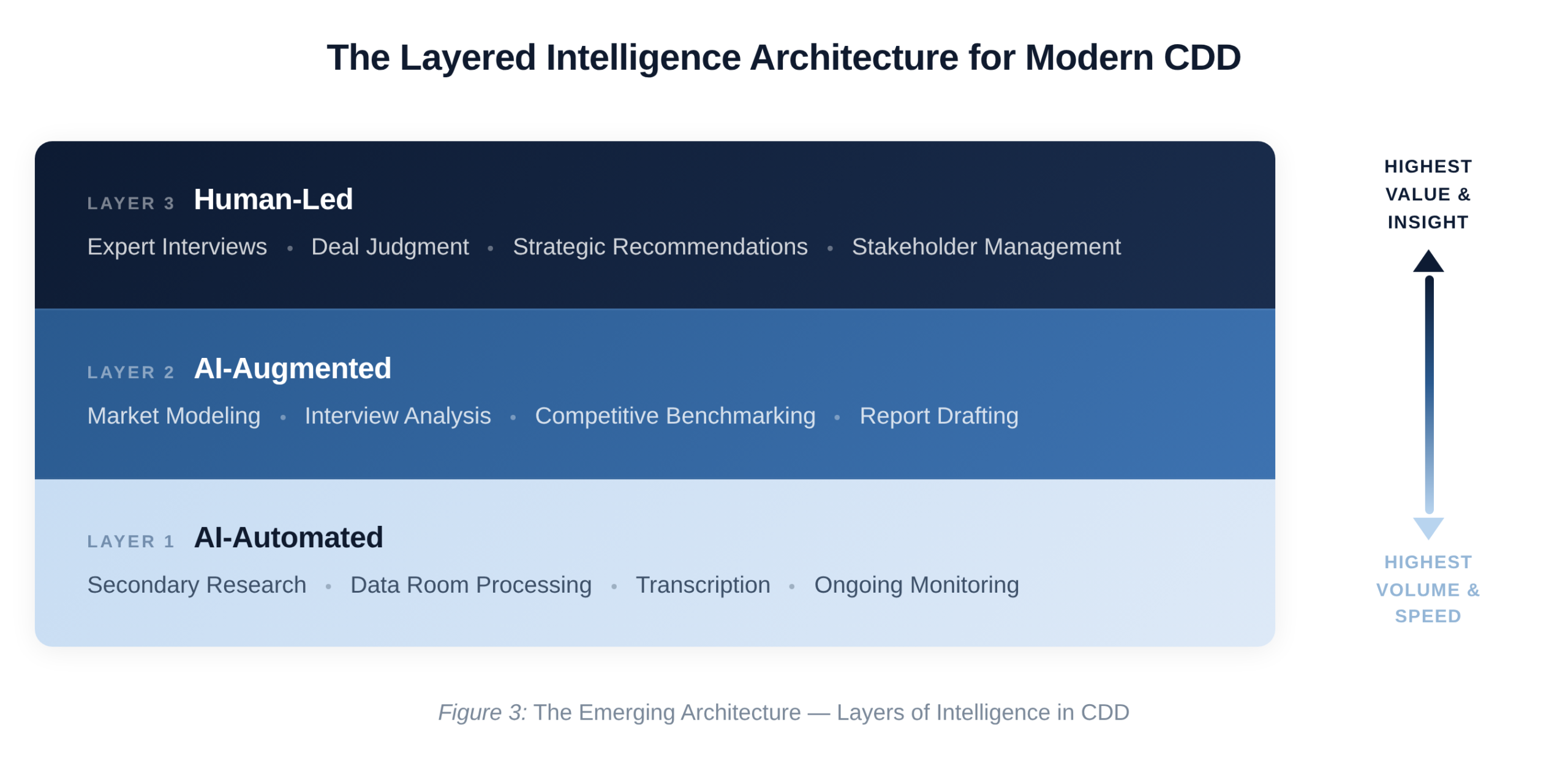
Figure 3: The Emerging Architecture: Layers of Intelligence in CDD
How to Evaluate AI Claims from CDD Providers
The AI hype cycle has created a new challenge for investors evaluating CDD providers: everyone claims to be “AI-powered” now. Here’s how to separate substance from marketing.
The assumption that AI can reliably synthesize diligence materials without human oversight is contradicted by the data. According to the Vectara Hughes Hallucination Evaluation Model (HHEM) benchmark, which measures how often large language models fabricate facts when summarizing documents they’ve been given, every major frontier model hallucinated between 4% and 14% of the time during the 2025–2026 evaluation period.
These are not edge cases generated from ambiguous prompts; this is the error rate when the model has the source document in front of it and is asked only to summarize. In a commercial due diligence workstream that touches hundreds of sources (customer interviews, financial filings, market reports, management presentations) a hallucination rate of even 5% compounds into a material threat to the accuracy of the investment thesis. AI without structured guardrails and rigorous human QC and accountability is not a productivity tool in diligence; it is a liability.
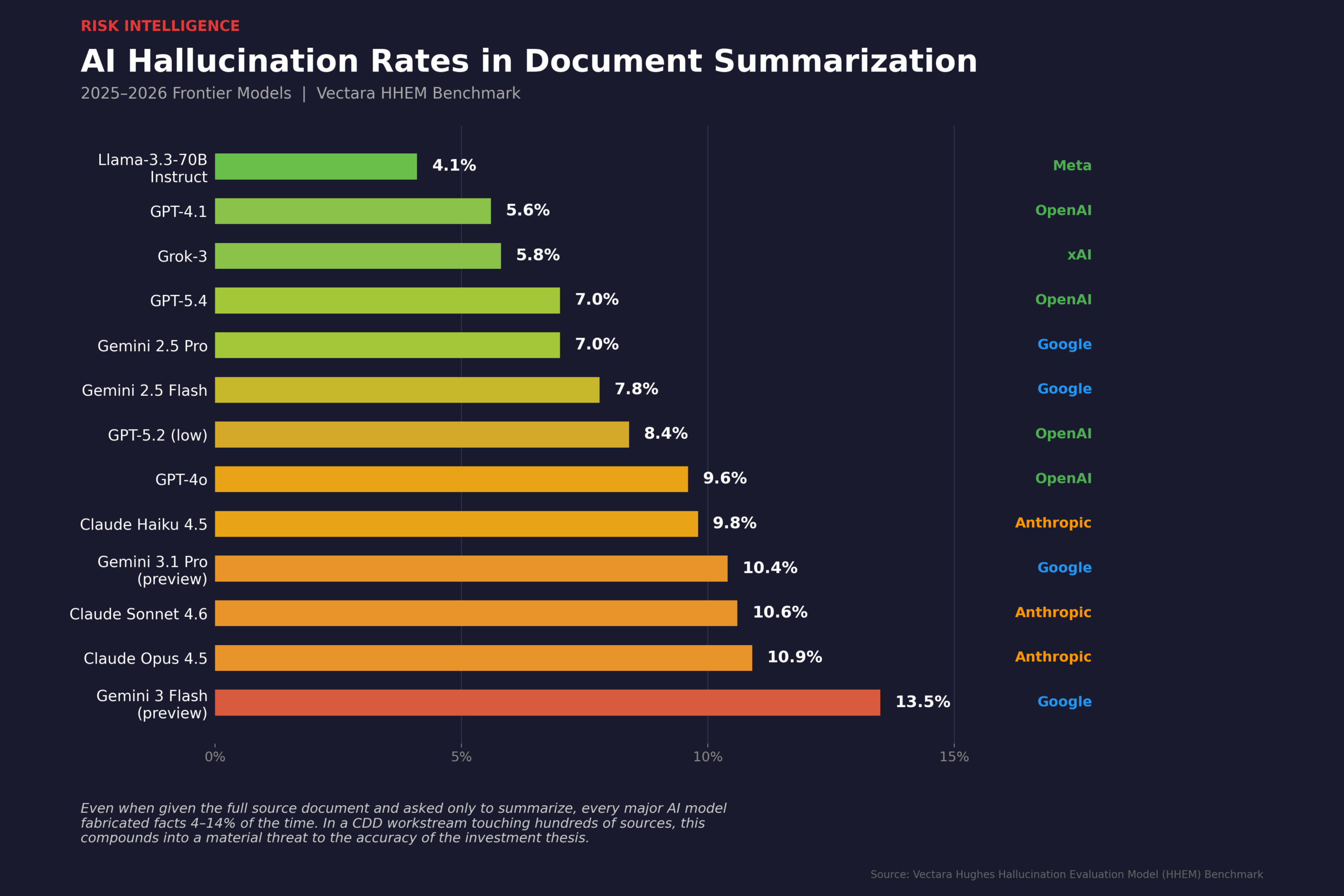
Figure 4: Chart Showing AI Hallucination Rates Across CDD
Task Categories
Without proper guidance, planning, and attention, AI use in research introduces a new category of unforced error at the exact point where precision matters most.
Questions to Ask
“What specifically do you use AI for in your CDD process?”
The right answer is specific: “We use AI for preliminary secondary research, data room document processing, interview transcription and thematic analysis, and competitive signal monitoring. All AI-generated outputs are reviewed by subject matter experts before they inform our findings.”
The wrong answer is vague: “We leverage cutting-edge AI across our entire platform to deliver next-generation insights.” That’s a marketing slide, not a methodology.
“What do you NOT use AI for?”
This is the integrity question. A provider who says “we use AI for everything” either doesn’t understand the limitations or isn’t being honest. The right answer acknowledges that primary research interviews, deal-specific judgment, market sizing validation, and strategic recommendations are human-led activities that AI supports but doesn’t replace.
“How do you govern AI-generated outputs?”
Look for specific protocols: who reviews AI outputs, what validation steps exist, how hallucinations are caught, and how the final deliverable distinguishes between AI-derived preliminary findings and primary-research-validated conclusions. If they can’t describe their governance process, they probably don’t have one.
“Can you show me a deliverable where AI-generated findings were overridden by primary research?”
This is the gold standard question. If the provider has real experience integrating AI into CDD, they’ll have examples where the AI’s preliminary analysis pointed one direction and their primary research revealed a different reality. Those examples demonstrate that the human review layer is actually functioning, not just claimed.
Red Flags
- “Our AI replaces the need for primary research.” Walk away. This is the most dangerous claim in CDD, and it reveals a fundamental misunderstanding of what makes commercial diligence valuable.
- “We can deliver a full CDD report in 48 hours using AI.” Speed without primary research is just a faster way to be wrong. A 48-hour turnaround on a CDD-grade analysis is physically impossible if it includes meaningful primary research: customer interviews, expert calls, and competitive intelligence require scheduling, conducting, and synthesizing conversations with real people.
- “Our AI has been trained on proprietary deal data.” This sounds impressive but raises serious questions. Whose deal data? With what consent? How is confidentiality maintained? And more fundamentally: training an AI on historical deal data doesn’t give it judgment about your current deal. Every deal is unique, and pattern-matching against past deals is exactly the kind of false confidence that leads to expensive mistakes. If this is the case, make sure the provider is compliant with standard federated learning approaches for leveraging confidential data in concert.
- No methodology transparency. If the deliverable doesn’t clearly describe what was generated by AI, what was derived from primary research, and what represents the analyst’s synthesis and judgment, you can’t evaluate the reliability of any individual finding.
The Right Model: AI-Enhanced, Human-Led CDD
The firms getting this right aren’t choosing between AI and human research. They’re building an integrated model where AI amplifies human capability at every stage of the CDD process.
Pre-Engagement: AI Accelerates the Starting Line
Before the engagement formally kicks off, AI tools can:
- Generate a preliminary market landscape in hours (where it used to take days)
- Build a first-pass competitive matrix from public sources, including hiring patterns, product launches, and recent funding
- Process data room documents and extract key commercial metrics, management assertions, and thesis-critical assumptions
- Identify potential interview targets from public information, LinkedIn, industry associations, and conference speaker lists
- Flag initial areas of concern or opportunity based on available data
- Generate a preliminary research design with suggested interview guides based on the identified thesis hypotheses
This means the CDD team walks into the kickoff meeting with a stronger hypothesis, better questions, and a more targeted research design. The engagement starts at mile 3 instead of mile 0. That’s 2-3 days of value delivered before the meter even starts running.
During the Engagement: AI Handles Volume, Humans Handle Judgment
During active research, AI continues to add value:
- Real-time transcription and thematic analysis of interviews. AI transcribes interviews as they happen and flags recurring themes across conversations conducted that day. The senior analyst reviews the AI-identified themes, validates them against their own interpretation, and adjusts the research direction for tomorrow’s interviews based on the emerging pattern. This feedback loop (AI identifies the pattern, human validates and acts on it) is faster and more thorough than either could achieve alone.
- Continuous competitive monitoring. While the team is conducting interviews, AI agents are scanning for new competitive developments, press releases, job postings, patent filings, or regulatory changes that might inform the research. When something material surfaces, it’s flagged for the team to investigate in their next round of interviews.
- Survey data processing at scale. When CDD includes quantitative surveys (which ours frequently do, 200-500 respondents), AI accelerates the analysis of open-ended responses, identifies sentiment patterns, generates cross-tabulations, and produces preliminary visualizations. The analyst reviews, interprets, and contextualizes, but the mechanical data processing is handled.
- Cross-stream synthesis. As findings accumulate from multiple research streams (interviews, surveys, secondary research, data room analysis), AI helps organize and cross-reference insights, identifying where findings align, where they contradict, and where gaps remain. This synthesis support ensures that no connection between data points is missed because it was buried in a different research stream.
- Quality control and consistency checking. AI can review the emerging report for internal consistency: does the market sizing align with the competitive share analysis? Do the customer interview findings support or contradict the pricing assumptions? These cross-checks happen continuously rather than at the end.
Post-Engagement: AI Extends the Intelligence Asset
After the engagement, AI capabilities enhance the long-term value of CDD deliverables:
- Searchable interview archives. AI-powered search across transcribed interviews enables the portfolio company and operating team to quickly access specific insights years into the hold period. “What did customers say about pricing sensitivity?” is now a searchable query across 50+ transcripts.
- Living market models. AI can flag when new data (industry reports, competitor earnings, regulatory changes) warrants an update to the CDD market model, and can generate preliminary model updates for analyst review.
- Competitive monitoring dashboards. Ongoing AI-powered tracking of competitors identified during CDD, alerting the portfolio company to meaningful competitive shifts: new product launches, leadership changes, geographic expansion, pricing moves, or M&A activity.
- Automated board reporting inputs. AI can generate preliminary quarterly updates on market conditions and competitive dynamics based on the CDD baseline, providing the portfolio company’s board with a consistent intelligence feed between formal strategy reviews.
- Exit preparation support. When it’s time to sell, AI can quickly compile the CDD intelligence evolution: how the market moved, how competition shifted, how the company’s position strengthened, into a data-rich foundation for the sell-side narrative.
AI as a Due Diligence Theme: Three Lenses for Evaluating AI’s Impact
Everything we’ve discussed so far has been about AI as a tool within the CDD process: how it can accelerate research, where it creates risk, and how to build the right human-AI model. But there’s a second, equally important dimension: AI as a subject of commercial due diligence itself.
PE firms aren’t just using AI to do diligence. They’re doing diligence on AI. And this work isn’t a single question or a one-paragraph check-the-box exercise. It’s three distinct analytical lenses, each with its own research methodology, each producing different conclusions, and each informing different parts of the deal model.
Lens 1: How Will AI Reshape This Market?
The first lens is about the market itself, not the target company. Every industry is being affected by AI in different ways and at different speeds. For the deal team, the question is: will AI change the size, structure, pricing dynamics, or competitive rules of the market this target operates in?
This is a macro question, but it demands primary research to answer well. Published forecasts about “AI’s impact on [industry]” are abundant, but they tend to be directional at best and wildly speculative at worst. The real intelligence comes from talking to market participants who are living through the changes in real time.
Consider a PE firm evaluating a mid-market logistics brokerage. The macro question isn’t “will AI affect logistics?” (of course it will). The useful questions are far more specific: Are shippers actually using AI-powered freight matching platforms, or are they still relying on broker relationships for complex loads? Is AI reducing the number of brokerage transactions in certain freight categories? Are the margins on AI-facilitated loads compressing, and if so, by how much compared to broker-intermediated loads?
These answers come from interviewing shippers, carriers, competing brokerages, and technology providers. They don’t come from asking an AI to summarize what analysts have predicted about AI in logistics.
The CDD output from this lens informs the market sizing and growth modeling directly. If AI is expanding the total addressable market (by making brokerage services accessible to smaller shippers who couldn’t afford traditional brokers), that’s a tailwind. If AI is shrinking the serviceable market (by enabling shippers to route simple loads without a broker), that’s a headwind. Both dynamics can be true simultaneously in different segments of the same market, and only primary research can parse which is dominant for the target’s specific customer base.
Lens 2: How Will AI Affect This Specific Target?
The second lens is company-specific. Even within the same market, AI’s impact varies dramatically from one company to the next based on their business model, customer relationships, competitive positioning, and operational maturity.
CDD under this lens evaluates whether the target company’s core value proposition is durable in an AI-disrupted environment. Bain & Company’s framework, based on evaluating over 1,000 companies, categorizes AI’s potential impact into three tiers:
Revolution: businesses where AI will fundamentally upend the model. The product or service becomes automatable, the value chain gets disintermediated, or the competitive moat evaporates because AI commoditizes the core offering. Bain’s research found fewer than 10% of companies fall into this category, and they’re relatively easy to identify in diligence. But missing one is catastrophic.
Transformation: businesses where AI will materially change the operating model, cost structure, or competitive dynamics but won’t eliminate the need for the core service. This is the largest category and the most nuanced for CDD. The question isn’t whether AI will impact the business (it will) but how, how fast, and whether the target is positioned to ride the wave or get swamped by it.
Augmentation: businesses where AI enhances productivity and efficiency but doesn’t fundamentally alter the value proposition, competitive dynamics, or market structure. Most companies fall here. The CDD question is about upside: how much efficiency can be unlocked, how quickly, and whether the target or its competitors are further along the adoption curve.
The research methodology for this lens centers on customer interviews. You need customers to tell you: “Would you replace this company’s service with an AI tool if one existed?” and “What would the AI need to do that this company currently does?” and “Where does this company add value that you can’t get from technology?” Those answers, triangulated across a significant number of customer conversations, tell you whether the target’s value proposition is durable or fragile in ways that no amount of desk research can replicate.
Lens 3: Can AI Supercharge This Company’s Growth?
The third lens flips the question entirely. Rather than asking “how will AI threaten this business?” it asks “how can AI propel this business forward?” This is the value creation lens, and it connects CDD findings directly to the operating team’s 100-day plan.
For PE investors, any AI initiative must have a measurable line of sight to EBITDA impact. RSM‘s AI due diligence framework emphasizes that the evaluation during CDD shouldn’t be about whether AI “could” theoretically improve the target’s operations. It should be about whether the target’s data infrastructure, talent, and culture can actually support AI adoption within the hold period, and what the realistic return on that investment looks like.
The questions under this lens are operational and specific:
- Does the target have clean, structured data assets that would enable AI-driven process improvements? Or would the value creation team need to spend the first two years building data infrastructure before AI delivers any meaningful return?
- What’s the target’s current technology stack, and how AI-ready is it? Some targets have massive upside from something as straightforward as deploying Microsoft Copilot across their workflows. Others would need years of foundational work.
- What’s the talent picture? Does the target have people who can implement and manage AI tools, or will the operating team need to recruit?
- Where are the highest-ROI AI use cases specific to this business? Is it customer service automation? Predictive maintenance? Dynamic pricing? Supply chain optimization? The answer depends entirely on the target’s operations, and it requires understanding those operations at a level of detail that only comes from primary research.
- What are the target’s competitors doing with AI, and is the target ahead or behind? This competitive intelligence question has direct valuation implications. If the target is ahead of its peers in AI adoption, that’s a source of sustainable advantage and potential premium valuation. If it’s behind, that’s a gap the value creation team needs to close, and the cost and timeline should be reflected in the underwriting model.
CliftonLarsonAllen’s (CLA’s) 2026 PE outlook identified AI as emerging as a standalone third value lever alongside financial engineering and operational excellence. That’s a fundamental shift in how deals are evaluated and how value is created post-close. CDD structured around this third lens, AI as a growth accelerant, gives the deal team a concrete picture of what AI-driven value creation actually looks like for this specific target, as opposed to the generic “AI will improve everything” narrative that management teams tend to present.
Why These Three Lenses Matter Separately
The reason to treat these as three distinct analytical workstreams, rather than one blended “AI impact” section, is that they produce different conclusions with different implications.
A company might operate in a market where AI is expanding total demand (Lens 1: positive), while the company itself faces moderate disruption risk because its core service relies on human relationships that AI can’t replicate (Lens 2: defensible), and it has strong data assets and a tech-forward culture that position it to capture significant efficiency gains from AI adoption (Lens 3: high upside). That’s a compelling AI story, but you only see it clearly when you analyze each dimension independently.
Conversely, a company might be in a market where AI isn’t changing much yet (Lens 1: neutral), but the target itself is vulnerable because its primary value proposition is information aggregation that AI can now do faster and cheaper (Lens 2: at risk), and it lacks the data infrastructure and talent to deploy AI defensively (Lens 3: limited near-term upside). That company needs a very different underwriting approach.
Blending these into a single “AI risk/opportunity” paragraph in the CDD report obscures the very distinctions that should inform the deal model.
The Five Questions Every Deal Team Should Be Asking
For every acquisition target in 2026 and beyond, CDD should be structured to answer these AI-specific diligence questions:
1. Will AI upend this business model? Is the target’s core value proposition, the thing customers actually pay for, at risk of being automated, commoditized, or disintermediated by AI? This requires understanding not just what the company does, but why customers choose it over alternatives. If the answer is “because they aggregate and synthesize information,” that’s a very different risk profile than “because they provide hands-on engineering services.” CDD customer interviews are the most reliable way to test this: ask customers directly what they value, what they’d replace with technology if they could, and what they can’t imagine automating.
2. How will market volumes and pricing be affected? AI doesn’t just change individual companies; it reshapes entire markets. If AI enables customers to do in-house what they currently outsource, market volumes shrink. If AI creates new demand by making a service accessible to smaller buyers, volumes grow. If AI commoditizes a premium service, pricing compresses. These dynamics are market-specific and can’t be assessed from a desk. They require talking to the buyers, the competitors, and the adjacent players who see the shifts happening in real time.
3. What cost efficiencies can AI unlock? During CDD, this means evaluating not just whether AI could theoretically improve the target’s operations, but whether the target’s data infrastructure, talent, and culture can actually support AI adoption. The delta between “AI could save this business 15% on operating costs” and “this business can realistically implement AI to save 8% within 18 months” is the difference between a theoretical pitch and an actionable value creation plan.
4. Where does the target sit on the AI adoption curve vs. competitors? This is a competitive intelligence question with direct valuation implications. CDD interviews with customers and industry experts provide the most reliable assessment of relative AI maturity because management teams invariably overstate their own sophistication.
5. What does the AI roadmap look like, and is it realistic? Management teams in 2026 all have an AI story. The question is whether it’s a story or a strategy. Does the AI roadmap connect specific initiatives to measurable business outcomes? Are the use cases validated by customer demand and operational reality, or are they theoretical aspirations? CDD provides the independent validation layer: we test management’s AI narrative against what customers actually want, what competitors are actually doing, and what the market actually rewards.
AI Deal Activity: The Numbers Tell the Story
The scale of PE interest in AI-related businesses underscores why this matters. Global PE deal value in AI and machine learning tripled from $41.7 billion in 2023 to $140.5 billion in 2024, representing 8% of total deal value, up from 3% the prior year. These aren’t just technology deals; they include businesses across every sector where AI is a material factor in the investment thesis.
The irony is fitting: the best way to understand AI’s impact on a business is to ask real people about it. Not to ask an AI about it.
What This Means for Investors
If you’re a GP, deal partner, or operating partner evaluating how AI changes your approach to CDD, here are the practical takeaways:
Don’t commission AI-generated market research and call it CDD. A 20-page ChatGPT output on market size, competitive landscape, and growth trends is not commercial due diligence. It’s a secondary research summary with no primary validation, no customer intelligence, no competitive primary calls, and no deal-specific judgment. It might cost $0, but it’s worth exactly that when you’re making a $50-200 million capital allocation decision.
Do expect your CDD provider to be using AI, and ask how. Any research firm that isn’t leveraging AI tools to accelerate secondary research, process data, and enhance analytical workflows is leaving speed and efficiency on the table. AI should be making CDD faster and more thorough, not replacing the human intelligence that makes it valuable. A CDD provider that dismisses AI entirely is as much of a red flag as one that over-relies on it.
Ask about AI governance. The right answer involves specific protocols: AI-generated outputs reviewed by subject matter experts, primary research validation of AI-derived hypotheses, transparent methodology that distinguishes between AI-sourced and human-sourced findings, and quality controls that catch hallucinations before they reach your IC memo. We should emphasize that walled proprietary AI systems are the only appropriate and policeable approach to consider here—publicly accessible AI platforms are not. We would advise that investors ask questions about data security, always secure an NDA, and be certain that their findings are confidential.
Understand what you’re actually buying. You’re not buying a market report. You’re buying judgment. You’re buying the experienced researcher who knows that the customer’s tone changed when asked about renewal intentions. You’re buying the analyst who recognizes that the AI’s market sizing approach used the wrong segmentation logic for your specific thesis. You’re buying the senior consultant who tells you, clearly and directly, that the deal thesis has a fundamental flaw, even when that’s not what you wanted to hear. In an era when AI can produce information at near-zero marginal cost, the value of a CDD engagement lies entirely in what the team does with that information: the thinking, the judgment, and the accountability.
Be skeptical of “synthetic” customer research. If a CDD provider or AI platform claims to have surveyed hundreds of customers using AI-generated respondents, ask them about the Verasight studies showing 14.5-point average error rates and catastrophic failures on multi-response and market research questions. Synthetic data is not customer intelligence. It’s a simulation that looks like customer intelligence, and the difference matters when you’re making nine-figure capital allocation decisions.
Include AI impact assessment in your CDD scope, across all three lenses. Every deal in 2026 needs to answer: how will AI change this market (Lens 1), how will it affect this company’s competitive position and value proposition (Lens 2), and what AI-driven value creation opportunities exist post-close (Lens 3)? These are CDD questions, not technology due diligence questions, because the answers come from customers and market participants, not from code reviews. Structure your CDD to include AI risk and opportunity as a core diligence dimension, not an afterthought.
Expect the model to evolve. The CDD firms that will be most valuable in 3-5 years are the ones investing now in the layered intelligence architecture we described: AI-automated data processing, AI-augmented analysis, and human-led judgment. The best providers are building these capabilities today, not waiting to see how it plays out.
AI makes the inputs to judgment better, faster, and more comprehensive. But the judgment itself, the synthesis of primary research, market data, competitive intelligence, and deal context into a recommendation you can trust, that’s still human work. The question isn’t whether AI will change CDD. It already has. The question is whether it changes the part that actually matters for your investment decision.
The Bottom Line
AI is not going to replace commercial due diligence. It’s going to raise the floor on what good CDD looks like. The secondary research layer will get faster and broader. The data processing will get more efficient. The pattern recognition will improve. Agentic workflows will automate more of the mechanical research infrastructure. Voice AI will expand the volume of primary data points that can be captured.
But the ceiling, the insight that changes how you think about a deal, still comes from a skilled researcher asking the right question to the right person at the right time. It comes from the follow-up question nobody anticipated. It comes from the experienced analyst who looks at the AI’s confident market sizing estimate and says, “That doesn’t pass the smell test. Let me call someone who actually sells into this market.”
The PE firms that understand this distinction will use AI to make their diligence faster without making it shallower. They’ll invest in CDD providers who leverage AI as an accelerant, not a substitute. And they’ll make better investment decisions because their intelligence process combines the speed of technology with the judgment of experience.
The firms that confuse “faster secondary research” with “better diligence” will learn the difference when they’re sitting in an Investment Committee meeting three years from now, trying to explain why the market they underwrote at $33 billion turned out to be $2 billion.
That’s a $31 billion lesson. CDD costs a fraction of a fraction of that.
The Martec Group integrates AI capabilities across our research process, from preliminary hypothesis generation through data room analysis, interview transcription, competitive monitoring, and report production. But every AI-generated insight is validated through primary research, expert judgment, and transparent methodology. We believe AI makes our work faster and more thorough. We don’t believe it replaces the human intelligence that makes our work valuable.