
Emotion research is becoming more popular, but there are many arguments about the “best” or “most accurate” way to complete it. There are those who go the neuroscience route, using electroencephalography (EEG), eye tracking, and other physiological measurements to capture how subjects are feeling. Then there are those who don’t go deep enough and simply rank a respondent’s feedback as positive or negative, with no attempt to delve further into the wide range of emotions encompassed within pleasant and unpleasant categories.
There also is a methodology that is situated in the middle. It avoids time-consuming and costly research processes; yet, still gives a deeper understanding of the specific emotions customers are feeling. Emotion Intelligence tools can analyze emotions through language – a ubiquitous medium that is simple, scalable, and seamless to integrate into existing market research techniques.
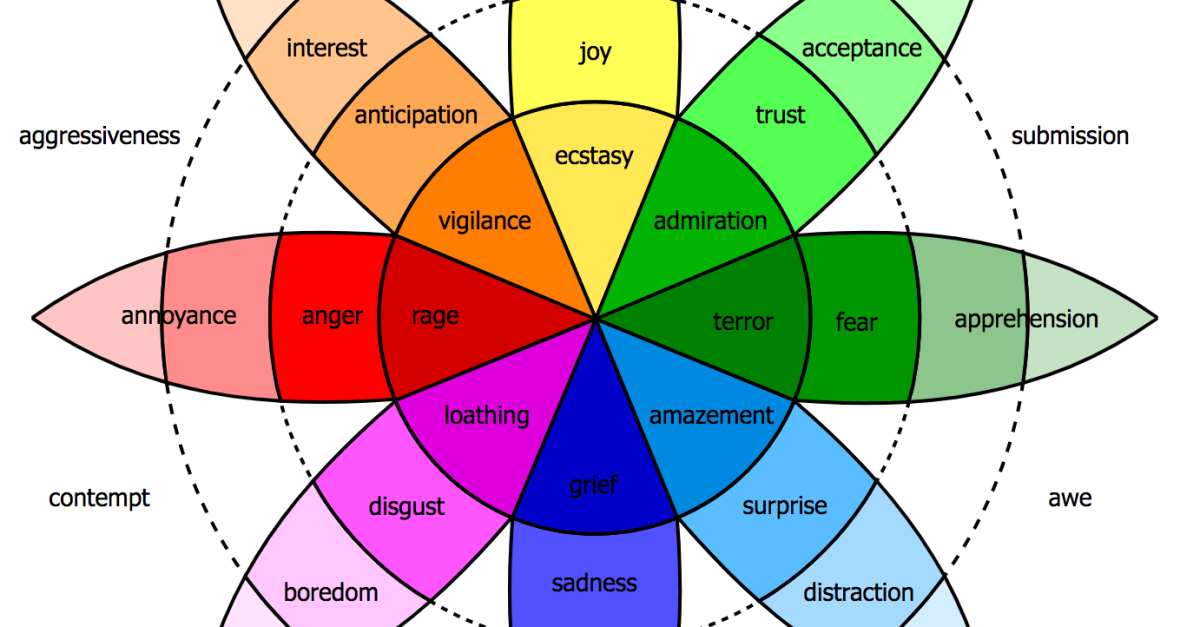
Many approaches to linguistic emotion-analysis exist, but Martec has found the most success with tools that approach emotion research through the lens of Plutchik’s Wheel of Emotions. The basis of Plutchik’s Wheel of Emotions is to pare down a vast number of emotions into a smaller, more manageable set of emotion “channels” that focus on what type of emotion is present. This allows for a simpler conceptualization of human feelings.
Plutchik’s Wheel of Emotions vs. Our Emotion Wheel
Using a dictionary of over 10,000 emotion words, we’ve developed a patented algorithm that organizes emotion words into a simple framework based upon Plutchik’s Wheel of Emotions. On the left below, you’ll see Plutchik’s Wheel channels. The right image is the analytical framework Martec has adapted for use in discovering and mapping customer emotions.
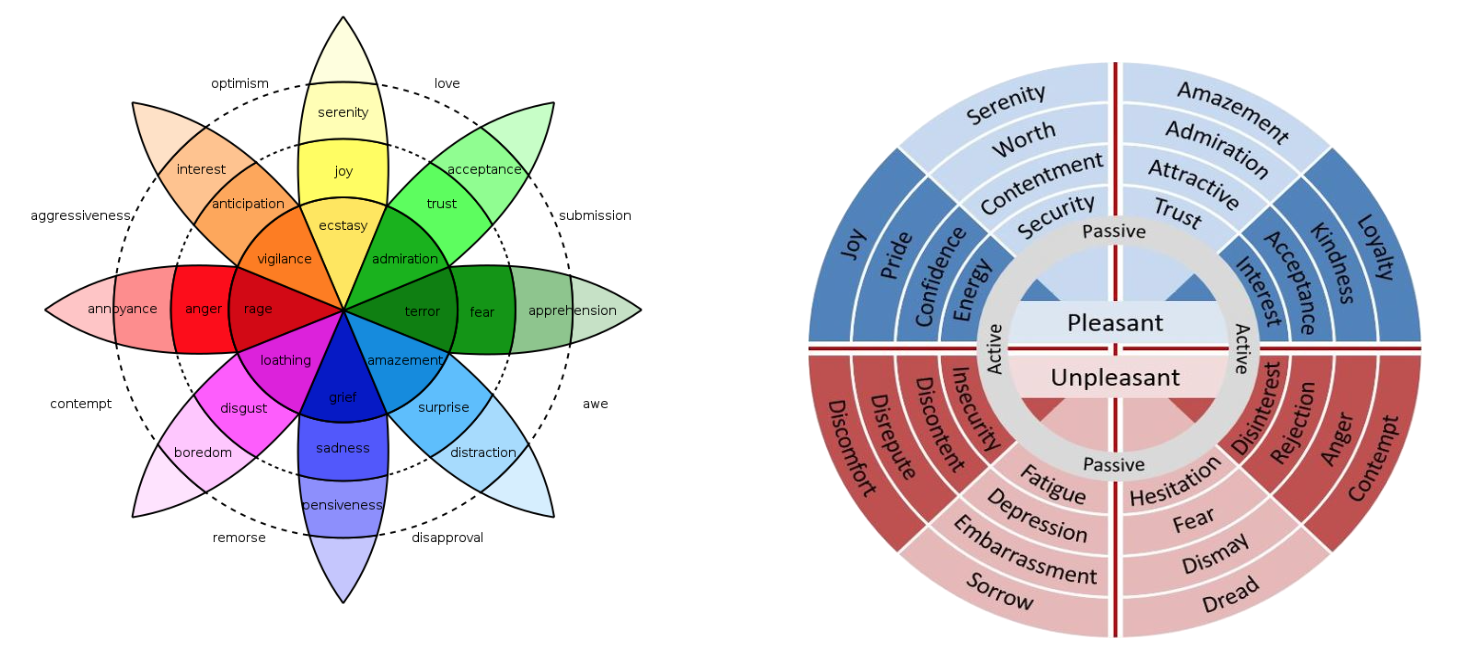
In both images, each emotion “channel” is representative of a specific type of emotion defined by four main channel properties.
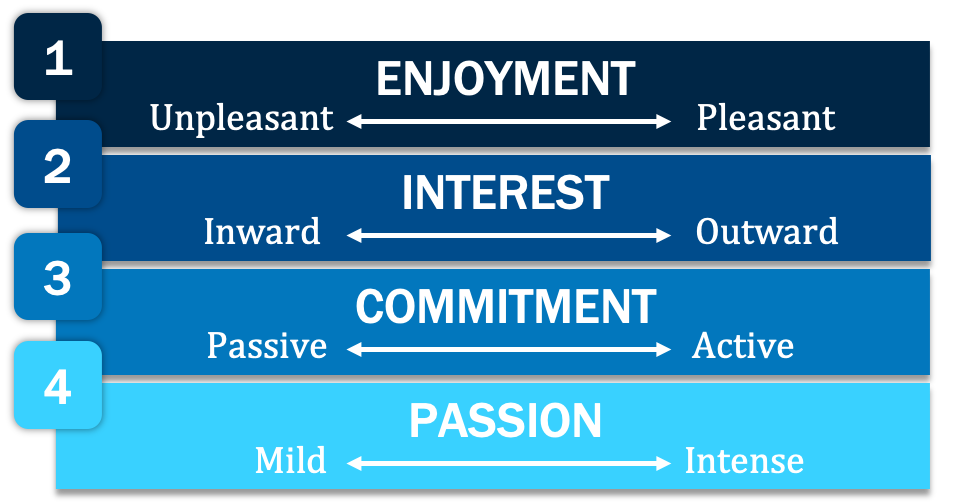
The first property is Enjoyment: is an emotion unpleasant or pleasant? This is a fairly obvious element and the base level for sentiment analysis. While a good starting point, enjoyment is all too often where companies stop in their emotion analysis. Just understanding whether an emotion is pleasant or unpleasant is important, but insufficient to really drive actionable outcomes.
The next property is Interest: is the person feeling inward (about “me”) emotions or outward (about what is outside/my environment) emotions. This property is crucial if you want to effectively communicate with your target audience. If your customers are feeling emotions that are predominantly about themselves (inward) and your communications are focusing on your product or brand only (outward), your message may not be truly heard.
The third property is Commitment: whether the person feels like being passive or active. Some emotions, such as Serenity, are passive and result in a desire to do “nothing” (e.g., relaxing on a beach). Other emotions, such as Joy, are active in nature, meaning the person feels like doing something (e.g., telling a friend, celebrating, etc.). Understanding whether your customers are feeling passive or active is essential if you want to motivate them to action…you need to understand their emotional starting point.
Finally, the last property is Passion: how “strong” is the emotion. Saying that “not all emotions are created equal” seems obvious but knowing how strong various emotions are can be tricky. Plutchik’s Wheel of Emotion provides an excellent guidepost for determining which emotions are stronger and therefore of higher priority to address or leverage.
Combining these four properties produces a simple-to-understand framework (matrix) of 32 emotion channels, grouped into eight channel groups which manifests into an Emotion Landscape. The Emotion Landscape identifies the most prominent emotions for a given topic and provides a starting point for further analyses, digging into key emotion channels, and beginning to understand how to better connect and communicate with target customers.
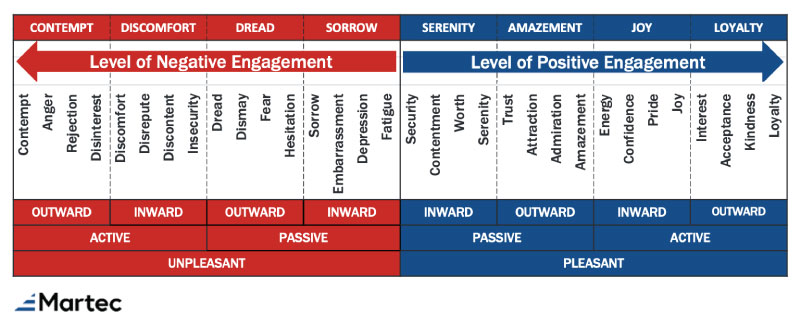
The result is that you don’t need to understand how to “deal with” 10,000 emotions. You simply need to understand the degree to which specific types of emotions are being felt. Then, by working with the associated primary properties of those emotions, you can identify the appropriate actions.